
A meteor is caused by a rock entering our atmosphere, usually at between 20 to 70 km/s. The meteor forms because the rock compresses the air in front of it, causing the gas temperature to rise sufficiently to melt the surface of the rock. Meteors are shooting stars. Most are tiny grains, perhaps pea-sized. But sometimes there are larger ones…
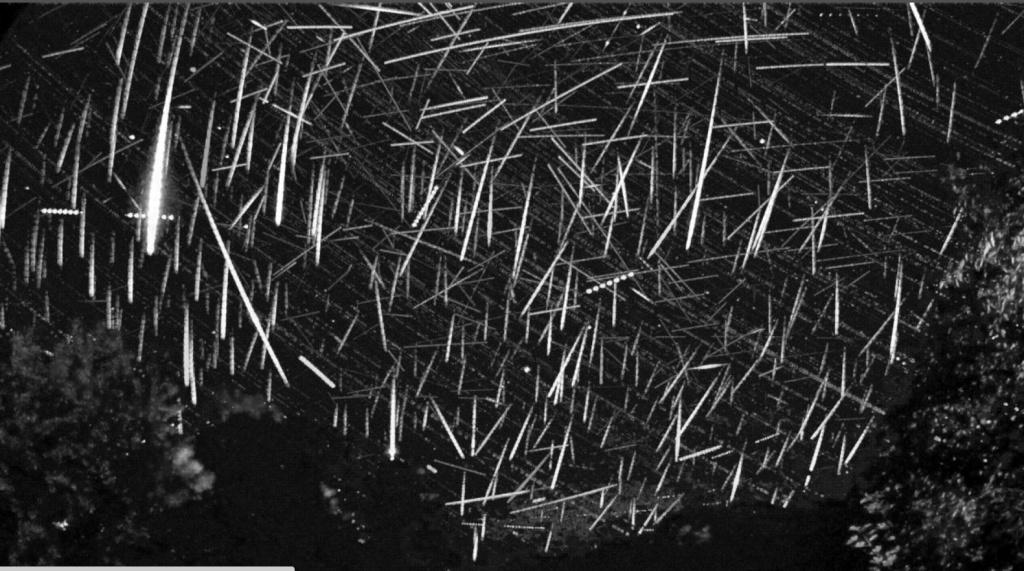
A meteor shower occurs when Earth passes through a stream of dust and debris left behind by a comet or asteroid. This results in many meteors appearing to come from the same part of the sky, which is known as a radiant and is named after the constellation that coincides with that area. There are more than 500 meteor showers known, although many remain poorly documented. Excellent visualization of some showers can be found here.
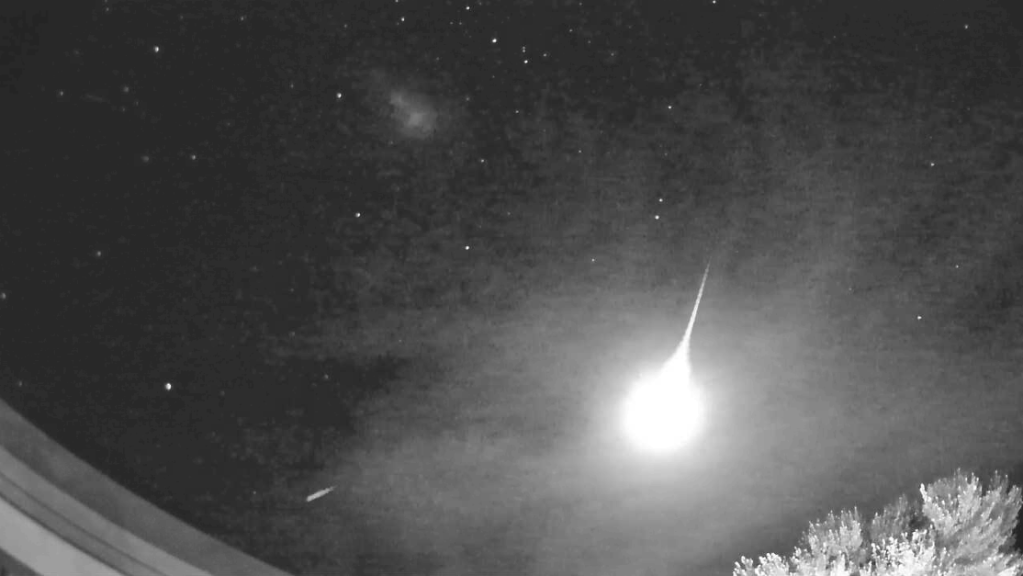
A fireball is a particularly bright meteor. It is bright because it reaches low elevation. Most fireballs are fragments of asteroids or comets. Asteroids tend to be traveling significantly slower than comets and have orbital trajectories within the inner Solar System.
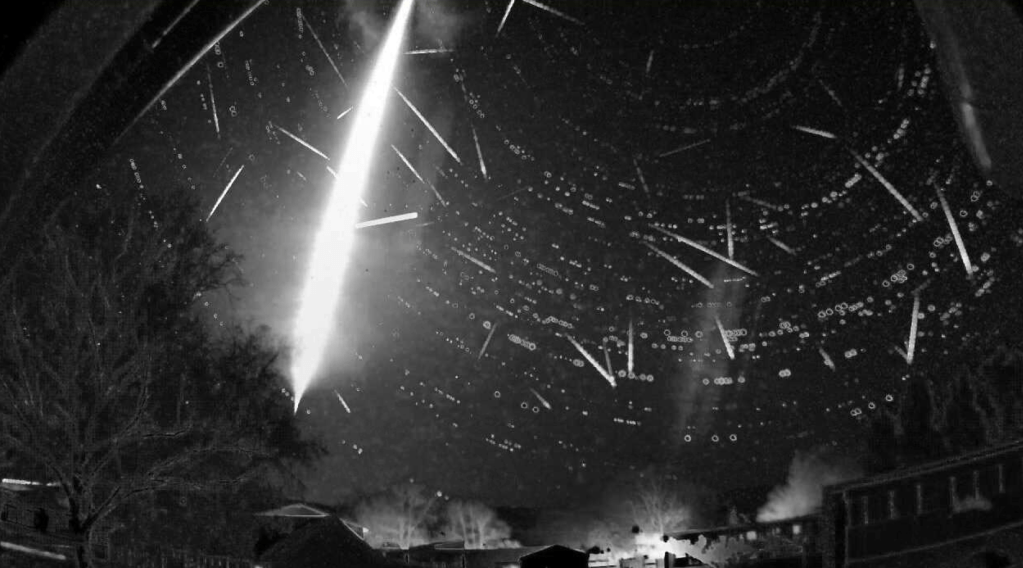
A meteorite is a rock that survives the fireball passage and lands on Earth. These tend to have a very thin dark fusion crust that is made of quenched glass. A critical point is that interior of a meteorite is commonly quite distinct. Not all meteors survive; meteorites are estimated lose 70 to 100% of their mass within the atmosphere. Meteorites are known to come from some asteroids, the Moon, and Mars. There are examples at the National History Museum in Copenhagen.

Most meteorites have been found in deserts or Antarctica, where the black fusion crust is distinctive against the paler ground. However, increasingly meteorite fall locations are being found from images captured by calibrated meteor cameras. You can set one of these cameras up. Images from different orientations enable the luminescent path of the rock through the atmosphere to be calculated very precisely. As the rock slows down through the atmosphere, the gases cool and the fireball stage ends. The rock now falls to the ground in a process called dark flight, where it is buffeted by winds. The location of the meteorite is known as a strewn field because many meteorites fragment into many pieces and are strewn about.
 Nordic Meteor Network